
Home » Disorders of the female reproductive organs

Custom Search
Popular Posts
-
 Bursae act as friction-reducing cushions around joints. Inflammation of a bursa, called bursitis, may occur if it is put under prolonged or ...
-
 Infection of the testis and epididymis (the coiled tube that stores and transports sperm away from the testis) can lead to inflammation call...
-
 If large areas of both sides of the brain or the brainstem are damaged, coma may result. In persistent vegetative state, the parts of the br...
-
Every women differs and so differs there choice of foreplay, some love it to be soft and tender while others relish wild foreplay. Kissing i...
-
 A ganglion is a cyst that develops under the skin near a joint and is filled with a jelly-like fluid. The ganglion is usually an outgrowth f...
-
 Normally, vaginal bleeding occurs only during a period. Bleeding that occurs outside of menstruation is abnormal. In women under the age o...
-
 Wernicke-Korsakoff syndrome is a rare disorder of the brain, causing dementia, abnormal eye movements, and an abnormal gait. The condition d...


Retroverted uterus
The uterus is normally inclined up-wards and forwards. In about 1 in 10 women the uterus is titled backwards, lying close to the rectum. This condition is known as a retroverted uterus and is a harmless variation of the normal position. There is often no cause for condition, although if may occur after childbirth or because an ovarian cyst pushes the uterus backwards.

A retroverted uterus usually causes no symptoms and does not affect fertility, pregnancy, or childbirth. However, you may feel pain during sexual intercourse or have low back-ache, especially during menstrual periods.
What might be done?
Your doctor may be able to feel that the uterus is retroverted during a pelvic examination. If an underlying disorder is though to be causing the condition, laparoscopy may be carried out to view the pelvis and abdominal cavity. Mild painkillers may relieve backache, and pain during intercourse may be relieved through trying a different sexual position. If there is an underlying cause, such as a cyst, this may be treated, allowing the uterus to return to its normal position.
Read more…

A retroverted uterus usually causes no symptoms and does not affect fertility, pregnancy, or childbirth. However, you may feel pain during sexual intercourse or have low back-ache, especially during menstrual periods.
What might be done?
Your doctor may be able to feel that the uterus is retroverted during a pelvic examination. If an underlying disorder is though to be causing the condition, laparoscopy may be carried out to view the pelvis and abdominal cavity. Mild painkillers may relieve backache, and pain during intercourse may be relieved through trying a different sexual position. If there is an underlying cause, such as a cyst, this may be treated, allowing the uterus to return to its normal position.
Uterine polyps
Uterine polyps are painless growths that are attached to the cervix or to the inside of the uterus. The polyps may occur singly or in groups and vary in length up to about 3 cm (1in). Polyps are usually harmless, but they may become cancerous in rare cases. Uterine polyps are common, especially in pre-menopausal women over the age of 30.
The reason why uterine polyps form is unknown, but they may develop on the cervix if it is already affected by a cervical erosion, in which the cells on the surface of the cervix are more delicate than usual. Polyps also sometimes form on the cervix following an infection of the area. Women who have not had children are more likely to develop uterine polyps.

Symptoms of uterine polyps include a watery, bloodstained discharge from the vagina and bleeding after sexual intercourse, between periods, or after the menopause. Such bleeding may also be a sign of a more serious disorder, such as cancer of the cervix.
What might be done?
Your doctor will usually be able to see polyps on the cervix by looking at the cervix while holding your vagina open with an instrument called a speculum. If polyps in the uterus are suspected, further investigations will be arranged, such as ultrasound scanning or hysteroscopy, in which a viewing instrument is inserted through the cervix to view the inside of the uterus.
Treatment of polyps is usually quick and easy. Polyps on the cervix may be removed surgically during examination through the speculum, and uterine polyps can be removed during a hysteroscopy. Mild pain and slight vaginal bleeding are likely for a few days after surgery. Samples of tissue form the polyps are examined under a microscopy to make sure that there are no cancerous cells. Uterine polyps may recur after treatment, and then further surgery is usually required.
Removal of the polyp from the uterine cavity. Grasping forceps.
Read more…
The reason why uterine polyps form is unknown, but they may develop on the cervix if it is already affected by a cervical erosion, in which the cells on the surface of the cervix are more delicate than usual. Polyps also sometimes form on the cervix following an infection of the area. Women who have not had children are more likely to develop uterine polyps.

Symptoms of uterine polyps include a watery, bloodstained discharge from the vagina and bleeding after sexual intercourse, between periods, or after the menopause. Such bleeding may also be a sign of a more serious disorder, such as cancer of the cervix.
What might be done?
Your doctor will usually be able to see polyps on the cervix by looking at the cervix while holding your vagina open with an instrument called a speculum. If polyps in the uterus are suspected, further investigations will be arranged, such as ultrasound scanning or hysteroscopy, in which a viewing instrument is inserted through the cervix to view the inside of the uterus.
Treatment of polyps is usually quick and easy. Polyps on the cervix may be removed surgically during examination through the speculum, and uterine polyps can be removed during a hysteroscopy. Mild pain and slight vaginal bleeding are likely for a few days after surgery. Samples of tissue form the polyps are examined under a microscopy to make sure that there are no cancerous cells. Uterine polyps may recur after treatment, and then further surgery is usually required.
Removal of the polyp from the uterine cavity. Grasping forceps.
Fibroids
Fibroids are abnormal growths in the uterus that consist of muscular and fibrous tissue. Fibroids are found in up to 1 in 3 women of childbearing age in the UK and are more common black women. Fibroids occur singly or in groups and may be as small as a pea or as big as a grapefruit. Small fibroids may not cause problems, but larger ones may affect menstruation or fertility.

What are the causes?
The cause of fibroids is unknown, but they are thought to be related to an abnormal response by the uterus to the female sex hormone oestrogen. Fibroids do not occur before puberty, when the ovaries begin to increase oestrogen production, and they usually stop growing after the menopause. They also increase in size at times when there are increased levels of oestrogen in the body, such as during pregnancy and when taking the combined contraceptive pill or hormone replacement therapy.
What are the symptoms?
Most small fibroids do not cause symptoms, but the common symptoms of larger fibroids include:
- Prolonged menstrual bleeding.
- Abdominal pain during periods.
- Heavy bleeding during periods.
Heavy blood loss may lead to anaemia, cause pale skin and tiredness. Large fibroids may distort the uterus, which can often result in infertility or in recurrent miscarriages. During pregnancy, a large fibroid may cause the fetus to lie in an abnormal position. Fibroids may also press on the bladder, causing a need to pass urine often, or on the rectum, causing back pain. Rarely, a fibroid may become twisted, resulting in sudden pain in the lower abdomen.
How are they diagnosed?
The doctor will perform a pelvic examination. You may also have ultrasound scanning of the uterus or a hysteroscopy, in which a viewing instrument is inserted into the uterus through the cervix. A sample of the fibroid will be removed during the hysteroscopy to check that the growth is not cancerous. Sometimes, fibroids show up on X-rays that are taken for other reasons.
What is the treatment?
Small fibroids often do not need treatment but should be checked regularly by your doctor to make sure that they have not grown. If treatment is necessary, fibroids may be removed during a hysteroscopy if they are on an inner wall. Rarely, fibroids are treated using an in injection of a substance that blocks the blood vessels supplying them, causing the fibroids to shrink.
Large fibroids can be removed via an incision in the abdomen. Before having the surgery, you may be prescribed hormones that suppress the production of oestrogen so that the fibroids shrink. If you have persistent, large fibroids and do not want children, you may consider having a hysterectomy. Removal of fibroids usually results in regained fertility, but in about 1 in 10 women fibroids recur. Fibroids usually start to shrink after the menopause, when oestrogen levels in the body fall.
HYSTEROSCOPY
A hysteroscope is an instrument used to see inside the uterus and fallopian tubes. Hysteroscopy is used to diagnose disorders such as uterine polyps and can be performed under general or local anaesthesia in an outpatient clinic. Minor surgery, such as the removal fibroids, may also be carried out through the hysteroscope. The procedure usually lasts 15 minutes or less.
Read more…
What are the causes?
The cause of fibroids is unknown, but they are thought to be related to an abnormal response by the uterus to the female sex hormone oestrogen. Fibroids do not occur before puberty, when the ovaries begin to increase oestrogen production, and they usually stop growing after the menopause. They also increase in size at times when there are increased levels of oestrogen in the body, such as during pregnancy and when taking the combined contraceptive pill or hormone replacement therapy.
What are the symptoms?
Most small fibroids do not cause symptoms, but the common symptoms of larger fibroids include:
- Prolonged menstrual bleeding.
- Abdominal pain during periods.
- Heavy bleeding during periods.
Heavy blood loss may lead to anaemia, cause pale skin and tiredness. Large fibroids may distort the uterus, which can often result in infertility or in recurrent miscarriages. During pregnancy, a large fibroid may cause the fetus to lie in an abnormal position. Fibroids may also press on the bladder, causing a need to pass urine often, or on the rectum, causing back pain. Rarely, a fibroid may become twisted, resulting in sudden pain in the lower abdomen.
How are they diagnosed?
The doctor will perform a pelvic examination. You may also have ultrasound scanning of the uterus or a hysteroscopy, in which a viewing instrument is inserted into the uterus through the cervix. A sample of the fibroid will be removed during the hysteroscopy to check that the growth is not cancerous. Sometimes, fibroids show up on X-rays that are taken for other reasons.
What is the treatment?
Small fibroids often do not need treatment but should be checked regularly by your doctor to make sure that they have not grown. If treatment is necessary, fibroids may be removed during a hysteroscopy if they are on an inner wall. Rarely, fibroids are treated using an in injection of a substance that blocks the blood vessels supplying them, causing the fibroids to shrink.
Large fibroids can be removed via an incision in the abdomen. Before having the surgery, you may be prescribed hormones that suppress the production of oestrogen so that the fibroids shrink. If you have persistent, large fibroids and do not want children, you may consider having a hysterectomy. Removal of fibroids usually results in regained fertility, but in about 1 in 10 women fibroids recur. Fibroids usually start to shrink after the menopause, when oestrogen levels in the body fall.
HYSTEROSCOPY
A hysteroscope is an instrument used to see inside the uterus and fallopian tubes. Hysteroscopy is used to diagnose disorders such as uterine polyps and can be performed under general or local anaesthesia in an outpatient clinic. Minor surgery, such as the removal fibroids, may also be carried out through the hysteroscope. The procedure usually lasts 15 minutes or less.
Cancer of the ovary
Cancer of the ovary is the fifth most common type of cancer in women and causes about 4,300 deaths each year in the UK, more than any other cancer of the reproductive tract. This high death rate is usually explained by the fact that symptoms do not develop until late in the progress of the disease, which delays the diagnosis and treatment.
The cause of cancer of the ovary is not known, but the tumour sometimes develops from an ovarian cyst. There seem to be hormonal and genetic risk factors for developing the disease. Women who have never had children or have had a late menopause are more likely to develop cancer of the ovary. Women with a close relative who developed ovarian cancer before the age of 50 are also at greater risk.
What are the symptoms?
Ovarian cancer rarely produces symptoms in the early stages, although there may be symptoms similar to those of an ovarian cyst, such as irregular periods. In most cases, symptoms occur only if the cancer has spread to other organs and may include:

- Pain in the lower abdomen.
- Swelling in the abdomen caused by excess fluid.
- Frequent need to pass urine.
- Rarely, abnormal vaginal bleeding.
There may also be general symptoms of cancer, such as loss of weight, nausea, and vomiting. Left untreated, the cancer may spread to other organs in the body, such as the liver or lungs.
How is it diagnosed?
If a close relative has had cancer of the ovary, you should consult your about screening for this type of cancer. Screening may detect cancerous changes before symptoms develop and allows treatment to be given in the early stages of the disease. You may be offered ultrasound scanning (through the vagina to look for a tumour or blood tests to look for a specific protein that is produced by this cancer. Otherwise, if your doctor suspects cancer of the ovary, he or she will examine your abdomen for the presence of swellings or lumps. You may have an ultrasound scan of your ovaries and a laparoscopy. Other tests that may be carried out include a chest X-ray and CT scanning of the lungs or liver to see if the disease has spread.
What is the treatment?

If cancer of the ovary is diagnosed in a woman who wishes to have children, usually only the affected ovary and fallopian tube are removed. If the cancer has spread to other parts of the reproductive tract or the woman does not wish to have children, a total hysterectomy may be performed, in which the uterus and both the fallopian tubes and ovaries are removed. Surgery is followed by chemotherapy to kill any remaining cancer cells. If the caner has spread to other organs in the body, radiotherapy may also be given. After treatment, blood tests and physical examinations are carried out regularly to check for recurrence.
What is the prognosis?
A complete recovery from cancer of the ovary is possible only if the condition is diagnosed and treated while in the early stages. However, the disease has spread in up to 3 in 4 women by the time of diagnosis. In these women, chemotherapy can prevent further spread of the cancer, sometimes for years, but it can rarely eliminate the cancer completely.
Read more…
The cause of cancer of the ovary is not known, but the tumour sometimes develops from an ovarian cyst. There seem to be hormonal and genetic risk factors for developing the disease. Women who have never had children or have had a late menopause are more likely to develop cancer of the ovary. Women with a close relative who developed ovarian cancer before the age of 50 are also at greater risk.
What are the symptoms?
Ovarian cancer rarely produces symptoms in the early stages, although there may be symptoms similar to those of an ovarian cyst, such as irregular periods. In most cases, symptoms occur only if the cancer has spread to other organs and may include:
- Pain in the lower abdomen.
- Swelling in the abdomen caused by excess fluid.
- Frequent need to pass urine.
- Rarely, abnormal vaginal bleeding.
There may also be general symptoms of cancer, such as loss of weight, nausea, and vomiting. Left untreated, the cancer may spread to other organs in the body, such as the liver or lungs.
How is it diagnosed?
If a close relative has had cancer of the ovary, you should consult your about screening for this type of cancer. Screening may detect cancerous changes before symptoms develop and allows treatment to be given in the early stages of the disease. You may be offered ultrasound scanning (through the vagina to look for a tumour or blood tests to look for a specific protein that is produced by this cancer. Otherwise, if your doctor suspects cancer of the ovary, he or she will examine your abdomen for the presence of swellings or lumps. You may have an ultrasound scan of your ovaries and a laparoscopy. Other tests that may be carried out include a chest X-ray and CT scanning of the lungs or liver to see if the disease has spread.
What is the treatment?

If cancer of the ovary is diagnosed in a woman who wishes to have children, usually only the affected ovary and fallopian tube are removed. If the cancer has spread to other parts of the reproductive tract or the woman does not wish to have children, a total hysterectomy may be performed, in which the uterus and both the fallopian tubes and ovaries are removed. Surgery is followed by chemotherapy to kill any remaining cancer cells. If the caner has spread to other organs in the body, radiotherapy may also be given. After treatment, blood tests and physical examinations are carried out regularly to check for recurrence.
What is the prognosis?
A complete recovery from cancer of the ovary is possible only if the condition is diagnosed and treated while in the early stages. However, the disease has spread in up to 3 in 4 women by the time of diagnosis. In these women, chemotherapy can prevent further spread of the cancer, sometimes for years, but it can rarely eliminate the cancer completely.
Polycystic ovary syndrome
In polycystic ovary syndrome, both of the ovaries become enlarged with multiple, fluid-filled cysts. The condition is thought to be caused by an imbalance of sex hormones, sometimes by a relative excess of luteinizing hormone, produced by the pituitary gland, and of the male sex hormone testosterone. This imbalance may prevent ovulation (egg release), thus reducing fertility, and sometimes leads to the excessive growth of body hair.
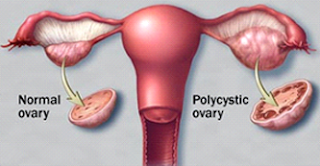
This syndrome is the most common female reproductive disorder, affecting about 1 in 20 women of childbearing age in the UK. The condition sometimes runs in families.
What are the symptoms?
The symptoms of polycystic ovary syndrome are variable. The condition may go unnoticed until a woman is tested for infertility. Symptoms include:
- Infrequent or absent periods.
- Obesity.
- Excessive hair growth.
Women with polycystic ovary syndrome have an increased risk of developing resistance to the action of the hormone insulin and this resistance may lead to diabetes mellitus. Women who are affected by the condition are also more likely to develop hypertension, coronary artery disease, and myocardial infraction.
What might be done?
If your doctor suspects that you have polycystic ovary syndrome, he or she will take blood samples to measure your levels of sex hormones and see if you have an imbalance. You may also have ultrasound scanning to look for ovarian cysts.
Treatment depends on the severity of your symptoms and whether you want to conceive. Infertility can be treated with drugs, such as clomiphene. If you do not want to have children, abnormal periods can be treated with a combined oral contraceptive pill.
To treat insulin resistance and reduce your risk of developing diabetes mellitus, your doctor may prescribe drugs such as melformin, which may also help to make
Read more…

This syndrome is the most common female reproductive disorder, affecting about 1 in 20 women of childbearing age in the UK. The condition sometimes runs in families.
What are the symptoms?
The symptoms of polycystic ovary syndrome are variable. The condition may go unnoticed until a woman is tested for infertility. Symptoms include:
- Infrequent or absent periods.
- Obesity.
- Excessive hair growth.
Women with polycystic ovary syndrome have an increased risk of developing resistance to the action of the hormone insulin and this resistance may lead to diabetes mellitus. Women who are affected by the condition are also more likely to develop hypertension, coronary artery disease, and myocardial infraction.
What might be done?
If your doctor suspects that you have polycystic ovary syndrome, he or she will take blood samples to measure your levels of sex hormones and see if you have an imbalance. You may also have ultrasound scanning to look for ovarian cysts.
Treatment depends on the severity of your symptoms and whether you want to conceive. Infertility can be treated with drugs, such as clomiphene. If you do not want to have children, abnormal periods can be treated with a combined oral contraceptive pill.
To treat insulin resistance and reduce your risk of developing diabetes mellitus, your doctor may prescribe drugs such as melformin, which may also help to make
Ovarian cysts
Ovarian cysts are fluid-filled sacs that grow on or in the ovaries. Most ovarian cysts are noncancerous and not harmful, but a cyst may sometimes become cancerous. Cancerous cysts are more likely to develop in women over the age of 40.

What are the types?
There are many types of ovarian cyst. The most common type is a follicular cyst, in which one of the follicles, where eggs develop, grows and fills with fluid. This type of ovarian cyst may grow to 5 cm (2 in) in diameter and usually occurs singly. Multiple small cysts that develop in the ovaries are thought to be caused by a hormonal disorder, and this condition is known as polycystic ovary syndrome.
Less commonly, cysts may form in the corpus luteum, the yellow tissue that develops from a follicle after the release of an egg. These cysts fill with blood and can grow to 3 cm.
A dermoid cyst is a cyst that contains cells that are normally found elsewhere in the body, such as skin and hair cells. A cystadenoma is a cyst that grows from one type of cell in the ovary. In rare cases, a single cystadenoma can fill the entire abdominal cavity.
What are the symptoms?
Most ovarian cysts do not cause symptoms, but when there are symptoms, they may include:
- Discomfort in the abdomen.
- Pain during sexual intercourse.
- Irregular periods, which sometimes have heavy blood loss.
- Postmenopausal bleeding.
Large cysts can put pressure on the bladder, leading to urinary retention or a frequent need to pass urine.
Are there complications?
If an ovarian cyst ruptures or becomes twisted, severe abdominal pain, nausea, and fever may develop. Cysts may grow so large that the abdomen is distended. In rare cases, a cyst producing the sex hormone oestrogen may develop before puberty, which leads to early sexual development. Some ovarian produce male sex hormones, which can cause the development of male characteristics, such as growth of facial hair.
What might be done?
Sometimes, ovarian cysts are only discovered when a pelvic examination is carried out during a routine checkup. If you have symptoms of a cyst, your doctor will perform a pelvic examination.
You may also be sent for ultrasound scanning or for a laparoscopy to confirm the diagnosis and the size and position of the cyst. You may also have blood tests to see if a cyst is cancerous.
Ovarian cysts may disappear without treatment, although the size of a cyst may be monitored with regular ultrasound scans. Large or persistent cysts may be drained or removed. If there is a chance that the cyst is cancerous, it will be removed, leaving the ovary and fallopian tube if possible. Ovarian cysts may recur if the ovary is not removed.
Read more…

What are the types?
There are many types of ovarian cyst. The most common type is a follicular cyst, in which one of the follicles, where eggs develop, grows and fills with fluid. This type of ovarian cyst may grow to 5 cm (2 in) in diameter and usually occurs singly. Multiple small cysts that develop in the ovaries are thought to be caused by a hormonal disorder, and this condition is known as polycystic ovary syndrome.
Less commonly, cysts may form in the corpus luteum, the yellow tissue that develops from a follicle after the release of an egg. These cysts fill with blood and can grow to 3 cm.
A dermoid cyst is a cyst that contains cells that are normally found elsewhere in the body, such as skin and hair cells. A cystadenoma is a cyst that grows from one type of cell in the ovary. In rare cases, a single cystadenoma can fill the entire abdominal cavity.
What are the symptoms?
Most ovarian cysts do not cause symptoms, but when there are symptoms, they may include:
- Discomfort in the abdomen.
- Pain during sexual intercourse.
- Irregular periods, which sometimes have heavy blood loss.
- Postmenopausal bleeding.
Large cysts can put pressure on the bladder, leading to urinary retention or a frequent need to pass urine.
Are there complications?
If an ovarian cyst ruptures or becomes twisted, severe abdominal pain, nausea, and fever may develop. Cysts may grow so large that the abdomen is distended. In rare cases, a cyst producing the sex hormone oestrogen may develop before puberty, which leads to early sexual development. Some ovarian produce male sex hormones, which can cause the development of male characteristics, such as growth of facial hair.
What might be done?
Sometimes, ovarian cysts are only discovered when a pelvic examination is carried out during a routine checkup. If you have symptoms of a cyst, your doctor will perform a pelvic examination.
You may also be sent for ultrasound scanning or for a laparoscopy to confirm the diagnosis and the size and position of the cyst. You may also have blood tests to see if a cyst is cancerous.
Ovarian cysts may disappear without treatment, although the size of a cyst may be monitored with regular ultrasound scans. Large or persistent cysts may be drained or removed. If there is a chance that the cyst is cancerous, it will be removed, leaving the ovary and fallopian tube if possible. Ovarian cysts may recur if the ovary is not removed.
Endometriosis
The lining of the uterus, known as the endometrium, is normally shed once a month during menstruation and the regrows. In endometriosis, some pieces of the lining become attached to organs in the pelvic cavity, such as the ovaries and the lower intestine. The misplaced pieces of lining react to the hormones of menstrual cycle and bleed during periods. The blood cannot leave the body through the vagina and causes irritation of the surrounding tissues, leading to pain in the abdomen and eventually scarring. Irritation of the ovaries may lead to painful cysts.
Endometriosis is a common condition, affecting as many as 1 in 5 women of childbearing age. Women who do not have children until they are in their 30s and those who remain childless are more likely to develop the condition. Severe endometriosis can often cause problems with fertility.
The exact cause of endometriosis is not known, but there are many theories. One theory is that fragments of endometrium shed during menstruation do not leave the body in the usual way through the vagina. Instead, they travel along the fallopian tubes, from where they may pass into the pelvic cavity and become attached to the surfaces of nearly organs.

What are the symptoms?
Endometriosis may not produce symptoms. If symptoms do develop, their severity varies from woman to woman. Symptoms may also vary depending on which organs are affected by the condition. They may include:
- Pain in the lower abdomen, which usually becomes more severe just before and during menstrual periods.
- Irregular periods or very heavy menstrual bleeding.
- Pain during sexual intercourse.
- Lower abdominal pain on urination.
If the endometrium grows on the lower intestine, you may develop diarrhoea or constipation, pain during bowel movements, and in rare cases, bleeding from the rectum during menstruation.
What might be done?
In women who do not have symptoms, endometriosis may only be suspected following investigations for infertility. To help make a diagnosis, your doctor will carry out a pelvic examination. The diagnosis may be confirmed with a laparoscopy (left), in which the organs in the pelvic and abdominal cavities are examined using a viewing instrument.
There are many different treatments for endometriosis, and the one chosen depends on your age, which organs are affected, the severity of symptoms, and whether you wish to have children in the future. You may be offered hormonal or surgical treatment. In mild cases, treatment may not be necessary.
If your symptoms are troublesome, your doctor may prescribe one of several different hormonal treatments that stop menstruation for several months. These drugs may include the synthetic hormone gonadorelin, gonadorelin analogues, and danazol, all of which suppress production of the female sex hormone oestrogen and have the effect of stopping menstruation. Alternatively, you may be given the combined oral contraceptive pill. This treatment is usually given for approximately 6 – 12 months, during which time the endometriosis should improve. If the condition does recur, it is usually milder than before.
Small fragments of endometrial tissue that do not respond to a period of hormonal treatment may be destroyed by laser surgery during a laparoscopy. However, endometriosis sometimes recurs after this treatment, and further operations may be necessary.
If you have severe endometriosis and you do not plan to have children or have gone through the menopause, your doctor may recommend that you have a hysterectomy to remove the uterus. Both ovaries will also be removed, together with other areas that are affected by endometriosis. If the ovaries are removed before you have reached the menopause naturally, you will develop menopausal symptoms. To alleviate these symptoms, your doctor will probably recommend hormone replacement therapy.
What is the prognosis?
Although treatment is usually successful, endometriosis may recur until the menopause occurs and the menstrual cycle ends. Endometriosis is unlikely to recur if the ovaries are removed.
LAPAROSCOPY
During laparoscopy, a rigid viewing instrument called a laparoscope is used to view the inside of the pelvis and the abdomen through small abdominal incisions. Laparoscopy may be used to look for disorders of the female reproductive organs, such as endometriosis, and to investigate other abdominal disorders, such as Appendicitis. Some types of surgery, such as female sterilization, may also be carried out during the procedure. Laparoscopy is always performed under general anaesthesia. Recovery is faster than after normal surgery due to the smaller incisions.
FEMALE STERILIZATION
Sterilization, by a method known as tubal ligation, is a permanent means of contraception for women who do not want any more children or for whom pregnancy would be harmful. The operation can be performed through two small incisions in the abdomen (laparoscopic sterilization) or single incision in the pubic area (minilaparotomy). The operation seals the fallopian tubes, usually by using clips or by cutting and typing them, so that sperm cannot travel through the tubes to fertilize eggs.
Read more…
Endometriosis is a common condition, affecting as many as 1 in 5 women of childbearing age. Women who do not have children until they are in their 30s and those who remain childless are more likely to develop the condition. Severe endometriosis can often cause problems with fertility.
The exact cause of endometriosis is not known, but there are many theories. One theory is that fragments of endometrium shed during menstruation do not leave the body in the usual way through the vagina. Instead, they travel along the fallopian tubes, from where they may pass into the pelvic cavity and become attached to the surfaces of nearly organs.

What are the symptoms?
Endometriosis may not produce symptoms. If symptoms do develop, their severity varies from woman to woman. Symptoms may also vary depending on which organs are affected by the condition. They may include:
- Pain in the lower abdomen, which usually becomes more severe just before and during menstrual periods.
- Irregular periods or very heavy menstrual bleeding.
- Pain during sexual intercourse.
- Lower abdominal pain on urination.
If the endometrium grows on the lower intestine, you may develop diarrhoea or constipation, pain during bowel movements, and in rare cases, bleeding from the rectum during menstruation.
What might be done?
In women who do not have symptoms, endometriosis may only be suspected following investigations for infertility. To help make a diagnosis, your doctor will carry out a pelvic examination. The diagnosis may be confirmed with a laparoscopy (left), in which the organs in the pelvic and abdominal cavities are examined using a viewing instrument.
There are many different treatments for endometriosis, and the one chosen depends on your age, which organs are affected, the severity of symptoms, and whether you wish to have children in the future. You may be offered hormonal or surgical treatment. In mild cases, treatment may not be necessary.
If your symptoms are troublesome, your doctor may prescribe one of several different hormonal treatments that stop menstruation for several months. These drugs may include the synthetic hormone gonadorelin, gonadorelin analogues, and danazol, all of which suppress production of the female sex hormone oestrogen and have the effect of stopping menstruation. Alternatively, you may be given the combined oral contraceptive pill. This treatment is usually given for approximately 6 – 12 months, during which time the endometriosis should improve. If the condition does recur, it is usually milder than before.
Small fragments of endometrial tissue that do not respond to a period of hormonal treatment may be destroyed by laser surgery during a laparoscopy. However, endometriosis sometimes recurs after this treatment, and further operations may be necessary.
If you have severe endometriosis and you do not plan to have children or have gone through the menopause, your doctor may recommend that you have a hysterectomy to remove the uterus. Both ovaries will also be removed, together with other areas that are affected by endometriosis. If the ovaries are removed before you have reached the menopause naturally, you will develop menopausal symptoms. To alleviate these symptoms, your doctor will probably recommend hormone replacement therapy.
What is the prognosis?
Although treatment is usually successful, endometriosis may recur until the menopause occurs and the menstrual cycle ends. Endometriosis is unlikely to recur if the ovaries are removed.
LAPAROSCOPY
During laparoscopy, a rigid viewing instrument called a laparoscope is used to view the inside of the pelvis and the abdomen through small abdominal incisions. Laparoscopy may be used to look for disorders of the female reproductive organs, such as endometriosis, and to investigate other abdominal disorders, such as Appendicitis. Some types of surgery, such as female sterilization, may also be carried out during the procedure. Laparoscopy is always performed under general anaesthesia. Recovery is faster than after normal surgery due to the smaller incisions.
FEMALE STERILIZATION
Sterilization, by a method known as tubal ligation, is a permanent means of contraception for women who do not want any more children or for whom pregnancy would be harmful. The operation can be performed through two small incisions in the abdomen (laparoscopic sterilization) or single incision in the pubic area (minilaparotomy). The operation seals the fallopian tubes, usually by using clips or by cutting and typing them, so that sperm cannot travel through the tubes to fertilize eggs.
Pelvic inflammatory disease
Pelvic inflammatory disease (PID) is a common cause of pain in the pelvic region in women. In this condition, some of the female reproductive organs become inflamed, usually as a result of an infection. Young and sexually active women are most likely to be affected. PID may have no obvious symptoms, and some women are unaware that they have had the condition until, years later, they are investigated for infertility.

PID is usually caused by a sexually transmitted infection (STI), such as gonorrhoea or chlarmydial infection. PID may also be caused by an infection developing after a termination of pregnancy or after childbirth. In rare cases, tuberculosis can develop in the pelvis.
The infection spreads upwards from the vagina to the uterus and fallopian tube. The ovaries may also be affected. An intra-uterine contraceptive device (IUD)makes this spread of infection more likely. If you think you may have an infection, tests will usually be performed so that you can be treated before PID develops. When PID is discovered during investigations for infertility, the original cause may remain unknown.
What are the symptoms?
PID may have no obvious symptoms, especially when caused by Chlamydia. If there are symptoms, they may include:
- Pain in the pelvic region.
- Fever.
- An abnormal vaginal discharge.
- Heavy or prolonged periods.
- Pain during sexual intercourse.
- Tiredness.
If PID develops suddenly, you may have severe pain, nausea, and vomiting, and urgent hospital attention is required.
If the condition is not treated, the fallopian tubes may be damaged. The infection may also spread to other organs in the pelvis and the abdomen.
What might be done?
If your doctor suspects that you have PID, he or she will carry out a pelvic examination. Swabs may be taken from both the cervix and the vagina to identify the organisms causing the infection. Ultrasound scanning of the pelvis may also be performed. If you have severe symptoms, you will be admitted to hospital, and a laparoscopy may be performed to view the abdominal and pelvic cavities.
Your doctor will probably prescribe antibiotics, which will be given intravenously if you are in hospital. You may also be given painkillers.
You should not have sexual intercourse until your recovery is complete. Your sexual partner should have tests to look for sexually transmitted infections and should be treated (if necessary to prevent a reinfection). If you use an IUD, you may be advised to change to a different method of contraception.
If PID is detected and treated early, you should make a complete recovery. If PID is not treated, damage to the fallopian tubes can increase the risk of having an ectopic pregnancy or may lead to infertility.
Read more…

PID is usually caused by a sexually transmitted infection (STI), such as gonorrhoea or chlarmydial infection. PID may also be caused by an infection developing after a termination of pregnancy or after childbirth. In rare cases, tuberculosis can develop in the pelvis.
The infection spreads upwards from the vagina to the uterus and fallopian tube. The ovaries may also be affected. An intra-uterine contraceptive device (IUD)makes this spread of infection more likely. If you think you may have an infection, tests will usually be performed so that you can be treated before PID develops. When PID is discovered during investigations for infertility, the original cause may remain unknown.
What are the symptoms?
PID may have no obvious symptoms, especially when caused by Chlamydia. If there are symptoms, they may include:
- Pain in the pelvic region.
- Fever.
- An abnormal vaginal discharge.
- Heavy or prolonged periods.
- Pain during sexual intercourse.
- Tiredness.
If PID develops suddenly, you may have severe pain, nausea, and vomiting, and urgent hospital attention is required.
If the condition is not treated, the fallopian tubes may be damaged. The infection may also spread to other organs in the pelvis and the abdomen.
What might be done?
If your doctor suspects that you have PID, he or she will carry out a pelvic examination. Swabs may be taken from both the cervix and the vagina to identify the organisms causing the infection. Ultrasound scanning of the pelvis may also be performed. If you have severe symptoms, you will be admitted to hospital, and a laparoscopy may be performed to view the abdominal and pelvic cavities.
Your doctor will probably prescribe antibiotics, which will be given intravenously if you are in hospital. You may also be given painkillers.
You should not have sexual intercourse until your recovery is complete. Your sexual partner should have tests to look for sexually transmitted infections and should be treated (if necessary to prevent a reinfection). If you use an IUD, you may be advised to change to a different method of contraception.
If PID is detected and treated early, you should make a complete recovery. If PID is not treated, damage to the fallopian tubes can increase the risk of having an ectopic pregnancy or may lead to infertility.

